Cross-appointment to UTokyo from April 2026

From April 2026 I begin my first semester teaching (until July) at the University of Tokyo as the senior tenured Professor of Anglo-American Law, succeeding Professor Kichimoto Asaka (whom I met first as visiting professor to VUW in the mid-1990s) and working closely with Professor Masayuki Tamaruya in the same Chair (specialising in comparative trusts law). From 2027 onwards I plan to spend the autumn/winter semester teaching at UTokyo. The rest of each year I will continue teaching at the University of Sydney as Professor of Comparative and Transnational Business Law, including its offshore joint program in Japanese law. From that base I will remain a founding co-director of the Australian Network of Japanese Law (ANJeL).

I am honoured, excited and a little nervous to be joining such fine scholars and students at a leading university for legal studies in Asia. I will initially give lectures and a related tutorial (zemi) to both LLB and postgraduate Law School (“JD”) students regarding Anglo-American law, including an introduction to the wider common law world particularly across the Asia-Pacific region. I will also offer a course on Dispute Resolution in Common Law Asia (including Australia-NZ, Singapore, Hong Kong, Malaysia, India and even the micro-state of Brunei). These will be offered in English for at least my first two years at uTokyo, but with some discussion and course materials also in Japanese.

I also look forward to continuing and expanding my comparative research in business law fields, especially international arbitration, foreign investment regulation, corporate governance, consumer and contract law. New writings over this year include (1) an article on ‘Evolving Antipodean, Asian and European Ambivalence Around ISDS Arbitration: A Compromise Way Forward?’, (2) a national report on Australia for the IACL Berlin Conference session then book on Contractual Justice (with UMelbourne’s professor Jeannie Paterson), (3) a chapter on Japanese law (with Ca’ Foscari UVenice professor Giorgio Colombo) for Elgar’s new Research Handbook on The Philosophical Foundations of Comparative Law (edited by associate professor Luca Siliquini Cinelli et al), (4) a chapter on corruption law and practice across Asia (with Keio Law School associate professor Nobumichi Teramura) in a book on World Comparative Law coordinated by Prof Mindy Chen-Wishart through NUS (where I will again be a visiting professor over January 2027, to teach Japanese Law), and (5) an article with Nobu on applicable laws in international arbitration and their impact on choice of seat (including a focus on Australia).

Best wishes for a Happy New Year of the Horse!

Tribute to Richard Nottage CNZM: Guest Blog from Sir Maarten Wevers

[Editor’s note: This is a speech kindly given by my late father‘s colleague Maarten Wevers, who also later became New Zealand’s Ambassador to Japan and a senior civil servant helping to build Asia-Pacific relationships, at a public funeral held at Old St Paul’s, Mulgrave Street, Wellington, on 5 November 2025. It draws on Maarten’s personal experience working with Richard and their other close colleagues, and a printout of Richard’s oral history that is being made publically available through the National Library.]

Kia ora tatou katoa.  Good morning everyone. 

Thank you, Luke, Andrea and Hunter, for inviting me to speak about Richard’s professional life.  I am humbled to be standing before you all today. 

I am a former colleague of Richard’s.  He had an enormous influence on my own career at Foreign Affairs, and therefore on my family’s life.  Louise and I will always be indebted to him.

Richard studied history and economics at the University of Canterbury.  This was made possible because, as the son of a returned serviceman, he applied, successfully, for a Charles Upham Scholarship.  Upham himself was at the interview. 

Richard’s MA thesis was on Chinese and Japanese politics and drew heavily on the unread Tokyo War Crimes archive at Canterbury.   Before he finished studying, Richard was given an introduction to Frank Corner at the Department of External Affairs in Wellington, who encouraged him to keep in touch.  Richard joined the Department in late 1962, aged 23. 

He started in the Property Division.  When he mentioned to Alister McIntosh, the departmental head, that he had been awarded a scholarship that would take him to Oxford, McIntosh told him ‘‘‘you have to take it up’ but you need to know more about the department before you go” – and promptly made Richard his executive assistant.   Richard has recounted how, over the next eight months, he saw every piece of paper that went across McIntosh’s desk, and thus, ended up with an invaluable understanding of the work of the Department. He also got to know many of the senior staff.  

At Oxford, Richard was tutored by a renowned expert on Japan, Prof. Richard Storry.  He was quite overwhelmed at the experience, describing Oxford as stunning.  In 1965, armed with a shiny new post-graduate degree, he “went down the road” to the New Zealand High Commission in London, to start work.  Heather accompanied him, as they had been married in Oxford. 

Richard’s first job was Commonwealth affairs.  In January 1966, he joined a four-person NZ Delegation attending a Commonwealth Heads of Government meeting in Lagos, on the Rhodesia issue. He was the “commonwealth expert”.  The experience of participating in such a key international conference was unforgettable. 

Two further such Commonwealth meetings followed, both in London, one later in 1966 and the other in 1969.  Both delegations were led by Prime Minister Holyoake.  Richard was again fully involved, at close quarters.

I mention this because Richard’s early years demonstrate how, as a very junior, new member of staff, he was closely involved with the leaders of New Zealand’s Foreign Ministry of the time.  He was also exposed to senior politicians, including the PM, and the issues they were having to deal with.  This all rubbed off on the young Mr Nottage. 

In late 1969, Richard and Heather, and by now, Luke, as well, returned to Wellington where Richard had a stint in the former External Aid Division.  The role including trying to open doors for New Zealand engineering firms, in the main, so that they could participate in large infrastructure projects in Asia that were being funded by international development agencies.  

Then, in 1971, completely unexpectedly, Richard was asked to go to Korea to open New Zealand’s first resident diplomatic mission.  He went as the number 2, because in those days, the Ambassador was still based in Tokyo.  This was a very steep learning curve – finding office space and residential accommodation, hiring local staff, getting to understand Korea, making the necessary connections.  And all without any Korean language.  Not an easy time. But it was Richard’s first posting in Asia, it was new and exciting, and made a deep impression.  The family, enlarged by now with the arrival of Andrea, returned home in early 1973. 

In Wellington, Norman Kirk was the new Prime Minister, and his new Government, and the new Foreign Affairs Secretary, Frank Corner, wanted the Ministry to place more emphasis on national identity, and on better understanding our place in the world.   Richard was working in information and cultural affairs.  

Just before Christmas, Frank Corner asked Richard to join Merv Norrish as one of just two Ministry officials who would accompany the Prime Minister on a three-week visit to Asia.   Travelling in an RNZAF Hercules, the first stop was Papua New Guinea where Mr Kirk met Michael Somare.  The PM then undertook official visits to Indonesia, Malaysia, Singapore, India, and Bangladesh, meeting his counterparts in each place.   This was an unprecedented programme and a game-changer in re-setting New Zealand’s understanding of, and engagement, with Southeast Asia.

In 1975, Corner said it would be good for Richard to broaden his experience, so he was sent to the New Zealand Embassy in Washington to cover the political and liaison roles. The family decamped once again, this time with Hunter in tow as well.   But living in the US proved to be a short-lived exercise.  Within a year, a cross-posting to Brussels as Deputy Head of Mission came up.  Unexpected, to say the least. 

The role in Brussels gave Richard his first real engagement in trade policy work, and trade negotiations – particularly over access for New Zealand sheepmeat and apples into the EEC market. A tough gig in those days.  “Constant, effective persuasion” was what was required Richard said.   Brussels also provided Richard with his first exposure to the intricacies of the GATT.  He was assiduous in building up invaluable connections with the New Zealand producer Boards and trade official counterparts in Brussels and across Europe.

After four years, the family was looking forward to returning home, but there was another change of plan – his first Head of Mission posting, to Jakarta.  Richard had three weeks to get there, because Prime Minister Muldoon was going to arrive on an official visit.  Heather and the children joined him three months later.  

Richard was delighted to be in Indonesia, where New Zealand expertise was being deployed to develop geothermal resources, and there was growing economic and political confidence in the region following the conclusion of the Viet Nam war.   

In 1982, Richard left Jakarta, because he was appointed Assistant Secretary of Economic and European Affairs in Head Office – which proved to be the ideal starting point for his next posting, in 1984, as Ambassador to the United Nations in Geneva, and Ambassador to the GATT.   This period covered the launch of the Uruguay Round of GATT negotiations, in 1986 – an intense period of economic diplomacy in which New Zealand was seeking major changes to the rules governing international trade.  Richard was a key member of the team supporting the energetic new Trade Minister, Mike Moore.  

In 1987, Richard was thrilled to be appointed as Ambassador to Japan. As he said in his oral history ‘after 25 years, the dream comes true!”   Richard commented later that he had expected to be there for four years, “that it would be a marvelous place, and that the Ministry could forget about me and just let me get on with it”.  Not to be.  Only a year or so after presenting his credentials to the Emperor, he was encouraged by Merv Norrish, now Secretary, to apply for the role of Deputy Secretary, Economic and Trade Relations.  He duly did so, taking up this critical appointment early in 1988.   Returning home from Tokyo early would have meant mixed emotions I’m sure. 

This was the time of the Lange government.  As part of their reform programme, a new Ministry of Foreign Affairs and Trade had just been created, bringing together parts of the former Department of Trade and Industry with Foreign Affairs.  The Trade Minister, Mike Moore, was ambitious for the new agency, and drove things at a fast clip. 

In 1986, New Zealand became a founding member of the Cairns Group of Agricultural Free Traders – an initiative launched by the Australians.  Mike Moore and Richard participated in the first meeting.  The work of the Cairns Group, and the Uruguay Round, were critical priorities in the new Ministry’s work, at home and abroad. 


Then in 1989, a group of Ministers of Trade and Foreign affairs from the Asia Pacific region came together in Canberra to advance the growing economic interdependence of East Asia and the Pacific.   The discussions were held against a backdrop of difficulties within the GATT negotiations.  This gathering was the first meeting of APEC, which has since become the pre-eminent high-level forum of our region, meeting annually.  Richard Nottage was there at the birth of APEC as well and travelled to Seattle four years later with Prime Minister Jim Bolger for the very first APEC Leaders’ Meeting.

In 1991, Richard was appointed Secretary of the Ministry of Foreign Affairs and Trade. He served for eight years. He succeeded to the job that McIntosh, Corner, and Norrish had held before him.  Richard was the right person for the job at that time. 

Richard’s term as Chief Executive was marked by close and productive working relationships with Ministers – led by the Deputy Prime Minister and Minister of Foreign Affairs, the Rt. Hon. Sir Don McKinnon.  Sir Don would very much have liked to have been here today and has asked me to pass on his condolences and respect to you, Luke and Hisae, Andrea and Roy, and Hunter and Sara, and your families.  

He remembers Richard as a positive leader of the Ministry, “who had the ball at his toe” for the time he was in office, largely because of his previous service in Geneva, Tokyo and Jakarta.  He understood Asia, and international trade.  Both topics were critically important for New Zealand at the time.  As Sir Don said, “as a country, we needed to do much better.  We were very far behind where we should have been in terms of political and economic relations with Asia”. Ministers were of the view that the newish Ministry, under Richard’s leadership, had a big part to play in addressing this state of affairs.  Richard understood that.

The former Minister of Trade, The Hon. Philip Burdon, recalls clearly that Richard was a strong advocate of the need for New Zealand to become more engaged in our region.  “Richard was deeply conscious of the emerging authority of Asia, and its significance for us” he said.  Mr Burdon observed that Richard reorganized the Ministry to give greater effect to its wider trade and economic mandate, to make it more relevant to the real needs of New Zealanders and better connected to the aspirations of the business and exporting communities. That was long overdue.   Mr Burdon especially welcomed Richard’s inclusive approach to Asia, including within New Zealand.

Both Ministers said that Richard had a knack for surrounding himself with smart people, at home and in missions abroad, who he backed to do their job.   He was a good delegator, a generous mentor, and managed with a light touch. 

As a former colleague put it – “If he trusted you, he trusted you completely, and gave you the rope you needed”. 

Others have remarked on his acute understanding of issues, his knowledge of those on the other side of the table, and their concerns, and his ability to analyse a situation and map a way forward.    He was happy to receive competing advice, and be challenged, and was open to new ideas.   Another colleague remembered that he always behaved as a professional public servant, with a sense of clarity and purpose.  And he was empathetic.

As the leader of the Ministry, Richard was respected and liked by his fellow Chief Executives in Wellington, who viewed him as constructive and collaborative.  He had a wide network of relationships with Ministers and officials, and former colleagues, overseas.   He was also a strong advocate for the Ministry and its purpose, at a time of pressure on the public purse.

During Richard’s term, the Ministry of Foreign Affairs and Trade brought stronger trade and international linkages to the heart of government policy decision making. The agency also broadened its connections to domestic constituents and diversified its staff profile and recruitment processes.  It strengthened links with te ao Maori, and made important steps to lift engagement with iwi organisations, as the Treaty settlement process became established.

One of Richard’s most valuable contributions was undoubtedly in support of the then Government’s efforts to lift community engagement with and understanding of Asia, within New Zealand, through the establishment of the Asia2000 Foundation, now the Asia New Zealand Foundation.  It has been commented that, in both the external and internal environments, Richard spearheaded and talked up engagement with Asia. 

Richard’s legacy can be seen as well in how much broader and stronger our international trading networks have become.  In 1991, we had only one free trade arrangement, with Australia, the CER Agreement.  Now, more than 80% of our trade is governed by such mechanisms. Although many of the more recent deals were concluded after Richard retired, he led the team when this direction of travel became embedded.  

Perhaps the convening of the APEC Leaders’ Meeting in Auckland in September 1999, held just after Richard stepped down, is the best symbol of how much things had changed over his career.  The Leaders of the countries that are most important for New Zealand’s future all came together, in our place, for the first time ever, and committed to work together for a better, common future.  He was just thrilled.

Looking back, I can’t help but reflect that it was actually that Charles Upham scholarship, offered to a boy who didn’t see his father for the duration of the Second World War, that turned out to be the key that opened the door to Richard’s incredible successes. What an amazing gift from one of New Zealand’s greatest heroes.

I want to conclude by recording that Richard was always a grounded, relatable, and positive person.  He had a wit and humour about him, was always a natty dresser, and with his beloved Heather, seemed always to be enjoying the fullness of what was a very rich life.   They were an amazing couple, and it is so sad that we have had to say goodbye to both of them within this year.  

It has been a hard year for everyone in the family, especially for the three children, and their partners, and the wonderful grandchildren.   Richard and Heather were always so proud of you.

I hope that you are comforted by the knowledge that so many of the people who worked with or knew Richard in in those energetic, bygone years are mourning with you as well.

Thank you.

Two Japanese/Asian Law conferences supported by ANJeL (November 2025)

1985–2025: 40 Years of Research on Japanese Law at the MPI – Time to Add New Voices

Dates: 13–15 November 2025
Location: Max Planck Institute for Comparative and International Private Law, Hamburg
Registration link and (below) current programhttps://www.mpipriv.de/1986946/13-to-15-november-2025-1985-2025-40-years-of-research-on-japanese-law-at-the-mpi-time-to-add-new-voices

To commemorate the 40th anniversary of Japan-related legal scholarship at the Max Planck Institute for Comparative and International Private Law (MPI), a major international conference will be held in Hamburg co-organised by ANJeL. Titled “1985–2025: 40 Years of Research on Japanese Law at the MPI – Time to Add New Voices,” the event will bring together emerging and established scholars to reflect on Japanese law’s impact regionally and globally.

The conference aims to transform a longstanding bilateral dialogue into a dynamic “multilogue” by inviting voices from Japan’s neighbouring jurisdictions—including South Korea, China, and Taiwan—to explore Japanese legal influence across academia, legal education, and practice. Themes will range from historical legal interconnectedness and official development assistance (ODA), to evolving patterns in research collaboration and legal training involving Japan. A conference volume is planned from the event.

Day 1 (13 November)
3:00 pm Welcome remarks

Session 1 New Perspectives on Japanese Law
Chair: Giorgio Colombo (University of Venice, Italy; substituting for Lena Foljanty from the University of Vienna, Austria)

3:30 pm Yoshiharu Matsuura (Professor emeritus, Nagoya University, Japan): Japanese ODA and legal technical assistance in Vietnam

4:00 pm Taro Morinaga (Former Prosecutor, former Director of the International Cooperation Department, Research and Training Institute, Ministry of Justice and former Director of the United Nations Asia and Far East
Institute for the Prevention of Crime and the Treatment of Offenders
(UNAFEI), Japan): The Development of Legal Technical Assistance by
Japan and Challenges

4:30 pm Ralf Michaels (MPI Hamburg, Germany): The Place of Japan in Decolonial Comparative Law
5:00 pm Discussion
5:45 pm Group picture

6:00 pm Reception
6:30 pm Keynote
Harald Baum (MPI Hamburg, Germany) / Moritz Bälz (Goethe University
Frankfurt, Germany): 40 Years of Research on Japanese Law at the MPI

Day 2 (14 November)
Session 2 Japanese Law Studies in Asia (Part I)
Chair: Béatrice Jaluzot (Lyon Institute for East Asian Studies, France)

9:00 am Alan Koh (Nanyang Technological University, Singapore): Singapore
9:30 am Hao-Yun Chen (National Taiwan University): Taiwan
10:00 am Discussion
10:30 am Coffee break
11:00 am Hongqian Zhou (East China University of Political Science and Law, PRC)

11:30 am Chul Kwon (Sungkyunkwan University, South Korea): South Korea
12:00 pm Discussion
12:30 pm Lunch break

Session 3 Japanese Law Studies in Asia (Part II)
Chair: Nobumichi Teramura (Keio University, Japan)

1:30 pm Apipong Sarntikasem (Judge in the Research Division of the Court of
Appeal for Specialized Cases (Juvenile and Family Case Division),
Thailand): Thailand

2:00 pm Rina Shahrullah (Batam International University, Indonesia): Indonesia
2:30 pm Discussion
3:00 pm Coffee break
3:30 pm Socheata Sao (Royal University of Law and Economics (RULE), Cambodia)

4:00 pm Akhadjon Khakimov (Tashkent State University of Law, Uzbekistan): Central Asia (and Mongolia)

4:30 pm Discussion

Day 3 (15 November)

Session 4 Asian Law(s) in Japan
Chair: Mai Ishikawa (Tohoku University, Japan)

9:00 am Souichirou Kozuka (Gakushuin University, Japan): Commercial Law
9:30 am Tatsuya Ota (Keio University, Japan): Past, Present and Future of Asian Law Studies in Japan

10:00 am Discussion
10:30 am Coffee break
11:00 am Hiroo Sono (Hokkaido University, Japan): The Role of Japan at UNCITRAL and AALCO

11:30 am Naoko Kano (Keio University, Japan): Asian Law in Statutory Reform
12:00 pm Discussion

12:30 pm Concluding remarks

Japanese Law Between Doctrinal and Area Studies — 2nd ANJeL-in-Europe Conference

Date: 18 November 2025
Location: Ca’ Foscari University of Venice

Following the success of the first ANJeL-in-Europe symposium in Pavia [mini-issue of the Journal of Japanese Law here], ANJeL and Ca’ Foscari University of Venice will co-host the second edition of this interactive academic forum. Entitled “Japanese Law Between Doctrinal and Area Studies,” the event will be held on 18 November 2025 and continue fostering engagement between comparative lawyers, Japanese law scholars, and area studies specialists.

This conference format will again encourage short presentations followed by extensive discussion, allowing participants to present recent or ongoing research in a collegial, workshop-style setting. While complete papers are not required, participants are encouraged to submit works-in-progress, especially with a view to potential publication in the Journal of Japanese Law or a new Italian journal focusing on Asian law and society.

Themes include interdisciplinary approaches to Japanese law, developments in national scholarship on Japan, and new trajectories for comparative legal study. Presenters may also reflect on insights gained from the earlier Pavia conference. THE CONFERENCE PROGRAM/FLYER IS HERE.

Participation is self-funded, but there is no registration fee, and an informal dinner will be hosted by the co-organisers on the evening of 17 November 2025. The event is coordinated by the ANJeL-in-Europe Program Convenor, Professor Dr Giorgio Fabio Colombo, [email protected].

Asian International Investment Agreements (IIAs) and Arbitration

Two of my recent articles in this area are now freely available in Open Access. The first below develops with Nobumichi Teramura an empirical argument comparing corruption-related provisions in IIAs across Asian states, including Japan as a very interesting case, building on our co-edited 2024 book. The other looks at wider regional developments around dispute resolution mechanisms in such agreements, including more focus on Australia. Both states have an opportunity to show regional and indeed global leadership for such mechanisms.

  1. Nobumichi Teramura, Luke Nottage, Corruption-related provisions in East and South Asian investment agreements: an empirical analysis, Journal of International Economic Law, 2025; jgaf013, https://doi.org/10.1093/jiel/jgaf013

This article analyses two types of provisions relevant to corruption in Asian international investment agreements (IIAs): clauses requiring (host) states to enforce anti-corruption laws and clauses that protect foreign investments made in accordance with host state laws. It tests whether IIA drafters act rationally regarding such clauses, or instead show status quo or other biases. This is complex first because rational strategies should depend on whether the state is a net exporter of foreign direct investment (FDI) or a net importer, but we explain how determining this status may be difficult. Secondly, rational strategies should depend on the relative extent of corruption in each state and, somewhat relatedly, the extent of inbound FDI claims. Despite such complexities and some instances of more ‘bounded’ rationality, overall states seem to be drafting both types of clauses rationally—even, and indeed especially, the net-FDI-importing states that tend to be transitioning economies. Adding to that empirical result from a more normative perspective, the article helps identify factors that could or should be considered by future IIA drafters, international bodies, or others tracking the trajectories of IIAs and corruption in Asia and beyond.

2. Luke Nottage, Australia’s Ambivalence Again Around Investor-State Arbitration: Comparisons with Europe and Implications for Asia, ICSID Review – Foreign Investment Law Journal, Volume 39, Issue 2, Spring 2024, Pages 320–346, https://doi.org/10.1093/icsidreview/siae029

In late 2022 Australia’s new Labor government declared that it would no longer agree to investor-State dispute settlement (ISDS) in future international investment agreements (IIAs). Section I reviews its previous anti-ISDS stance (governing with the Greens over 2011 to 2013) inspired by more articulated policy rationales but also the first claim against Australia, over tobacco plain packaging legislation. Then followed the centre-right coalition government’s return to including ISDS on a case-by-case assessment (2014–21) drawing partly on different arguments and evidence. Section II suggests that a new factor behind the latest policy shift comprises a second set of significant ISDS arbitration claims against Australia, from the Singaporean subsidiary of an Australian mining magnate and right-wing political leader. Section III draws parallels with the European Union (EU), whose developed economy member States reacted to inbound ISDS claims by replacing traditional ISDS from 2015 with an ‘investment court’ hybrid process, then influencing multilateral ISDS reform negotiations. Intra-EU ISDS claims are also being precluded by the Court of Justice of the EU, but in the context of European law and institutions providing an alternative pathway for European investors to hold other member States to account. Section IV considers the implications of Australia’s anti-ISDS stance for ongoing and potential IIA (re)negotiations with the EU and Asian States, including the feasibility of moving towards an EU-style investment court approach in Asia-Pacific IIAs. Section V concludes by linking these developments to ongoing debates about reforms to ISDS—locally, regionally and globally—as well as about incomplete investment IIAs.

“The Promises and Pitfalls of International Commercial Arbitration”

[This the abstract for my judicial training lecture organised by the Legal Training and Research Institute, kindly invited by the Supreme Court of Japan, delivered on 5 March 2025 at the Tokyo Facilities for Arbitration Hearings. Powerpoints are available in English and translated into Japanese. An edited, updated and footnoted version of the transcript is forthcoming in the Japan Commercial Arbitration Journal (2025).]

Survey and other evidence typically identify many advantages of international commercial arbitration (ICA) over cross-border litigation. This explains why ICA is overwhelmingly the most preferred dispute resolution mechanism included in international commercial contracts (and even investment treaties). Yet ICA faces growing problems.

Enforceability of arbitration agreements and awards is challenged by new Hague Conventions for enforcement of judgments, and by the 2018 Singapore Convention for enforcing mediated settlements, although these instruments still have few ratifications. Neutrality and related expertise of arbitrators encounter rising challenges to arbitrators and the emergence of international commercial courts, notably in Singapore. Confidentiality in arbitration is not uniform and anyway can increase unpredictability, as well as making it harder for users to assess if arbitrators and lawyers provide good value for their services. Limited discovery of documentary evidence and other flexibility in arbitration procedures is offset by the proliferation and hardening of “soft law” instruments and standardised practices. The lack of appeal for error of law promises finality in awards but arbitration overall is not much quicker, cheaper or more amicable than litigation of commercial disputes.

This lecture elaborates such promises and pitfalls of ICA nowadays. It considers what could be done to improve the environment for ICA generally, enhancing traditional advantages while reducing costs and delays, in the context of countries like Australia and Japan that have struggled to attract ICA cases.

Related reading:

Redesigning Consumer Law for the E-Commerce Era: Insights from Comparing Australia and Japan

Written by: Luke Nottage (University of Sydney) and Souichirou Kozuka (Gakushuin University, ANJeL-in-Japan program co-convenor)

Leading up to Australia’s federal election due by May 2025, the Commonwealth Treasury has (re-)initiated public consultations into reforms to the Australian Consumer Law (ACL), partly responding to the growth of e-commerce especially since the COVID-19 pandemic. Two main consultations in fields outlined below, compared to regimes in Japan, highlight some intriguing features for policy debate – extending also into the wider Asia-Pacific region.

First, unlike consumer laws in most jurisdictions across Asia, the ACL has already come to apply to many business-to-business (B2B) transactions. A typical economic argument is that this levels the playing field so businesses compete transparently and consumers have more trust in the market. However, there is a risk of individual consumers cross-subsidising through higher overall prices the businesses gaining similar protections. An additional political dynamic may be that Australia has often closely-fought elections, and many small businesses pressing for the same protection as individual consumers.

Secondly, the federal consumer affairs regulator, the Australian Competition and Consumer Commission (ACCC) and State or Territory regulators also have comparatively strong enforcement powers. Thirdly, the ACL and some proposed reforms highlight whether consumer law can and should rely on generally worded standards, more specific rules, or both.

Australia’s Treasury last year renewed a consultation into whether the ACL should add further prohibitions on unfair commercial practices, to address burgeoning concerns such as ‘subscription traps’ (suppliers making it much harder to cancel subscriptions than to sign up). Such practices are not easily covered by the ACL’s prohibition on misleading conduct by any suppliers ‘in trade’ (hence also B2B, since the 1970s). Nor do they usually fall within the broadly worded prohibition on unconscionable conduct, taking advantage of particular vulnerable groups (gradually extended to B2B since the 1990s).

The latest Treasury-led proposal sought further views on adding both a general prohibition on unfair practices (for example as in the EU, but there limited to business-to-consumer or B2C transactions, ie involving an individual transacting with a supplier for a non-commercial purpose). It also discussed specific prohibitions (as with legislation recently added in Germany, the UK and the USA against subscription traps). Regulators like the ACCC would enforce such new prohibitions in both B2B and B2C situations, including through injunctions, as for unconscionable or misleading conduct and specific types of prohibited misrepresentations.

Japan’s comparable regime instead regulates only B2C transactions and has come to preference specific prohibitions. The Consumer Contracts Act 2000 allows consumers to cancel contracts arising from some types of misrepresentations, plus various very specific situations of unconscionable advantage-taking. Business associations argue that a broader general provision would be very hard to comply with.

Extra challenges for consumers arise because injunctions against suppliers’ bad advertising and practices leading into contracts can only be brought through government-certified consumer NGOs. This system was inspired by German law but Japan’s NGOs are very small and under-resourced. Further, because the Consumer Contracts Act applies only B2C, it is hard to generate sufficient momentum among claimants, and hence case law.

The Consumer Affairs Agency, when established independently in 2009, assumed jurisdiction from the Japan Fair Trade Commission (the competition regulator) only to enforce the Act against Unjustifiable Premiums and Misleading Representations that prohibits representations promoting the quality of goods or services as ‘significantly superior’ or describing trade terms as ‘significantly more advantageous’ than they actually are.  Particular bad practices are also regulated by the Designated Commercial Transactions Act (as it was renamed from the Door-to door Sales Act in 2000), for example allowing ‘cooling off’ (withdrawal rights) for consumers in high-pressure situations like door-to-door selling or buying. Besides administrative orders now issued by the Agency, criminal penalties can be imposed for not providing contracts in writing or alerting consumers to such rights.

A second major Treasury consultation in Australia from 2024 asks for further views on whether regulators should be able to issue civil fines on suppliers failing to give ACL remedies for minimum performance standards in contracts (‘consumer guarantees’, as in New Zealand and Malaysia, but extending to some B2B situations). These require goods to be of ‘acceptable quality’ and services to be provided with due care. Since 2023, Australian regulators already have such a power to fine for first-time use of unfair terms in standard-form contracts. From 2016, regulation of such terms was extended to contracts with  ‘small business’, including now some medium-sized ones.

Adding such civil pecuniary penalties was seen as more effective than relying on injunctions to stop misuse of unfair terms, and/or consumers proving they are unfair so are void. This innovation, adding public sanctions, is despite Australia gradually introducing from the 1990s a US-style ‘opt-out’ class action system. That was premised on lawyers (perhaps with third-party litigation funders, allowed since 2006) might efficiently aggregate smaller value claims (such as excessive and therefore unfair bank fees). Yet even this regime seems to have been insufficient to prevent the spread of unfair terms, including in online businesses.

Japan’s Consumer Contracts Act similarly voids a few specific types of unfair terms. It does have also a general provision voiding others where contrary to good faith (ie unreasonable, compared to general Civil Code default provisions for contracts). However, business associations are opposed to listing in the Act even a ‘grey list’ of further contract terms that may be unfair, as in the ACL (and the EU law on unfair terms that influenced Australia, as well as partly Japan).

Furthermore, Japan’s Act again applies only B2C, although there is also some weak regulation of standard form terms extending to B2B under Civil Code amendments for contracts concluded after 2020. Injunctions to prevent misuse of unfair terms are only possible through certified NGOs, not consumer regulators, and the latter cannot issue fines. A class action regime introduced in 2013 also requires coordination through certified NGOs (not eg a law firm), and inefficiently requires individual consumers to opt-in to claim damages if and when a court finds liability for a class. Unsurprisingly, few claims have been made so far.

Despite these comparative limitations on consumer protection law in Japan, the practical outcomes in Australia may not be so different until recently, thanks to better customer service and reputational effects in Japan. However, the explosion in e-commerce and new types of marketing or practices, as well as possible transplantation of unfair terms into online contracts, may lead to a stronger message being sent to Japan (and Asian countries like Singapore, similarly lacking a broad unfair practices prohibition). This could be achieved by law reforms extending protections to some B2B situations, beefing up generally worded and/or specific prohibitions, expanding powers of regulators (for injunctions and even fines), and/or moving to a US-style opt-out class action system. However, the compliance costs and chilling effects on business innovation also need to be weighed carefully.

Guest Blog – Corruption and Investment Arbitration in Asia: New Frontiers

Written by: Corinna Chen (CAPLUS research assistant, 2024)

On 1 August 2024, the University of Sydney Law School hosted an insightful seminar jointly presented by its Centre for Asian and Pacific Law (CAPLUS) and the Australian Network for Japanese Law (ANJeL). The event featured the local re-launch of a new book titled Corruption and Illegality in Asian Investment Arbitration (Teramura, Nottage and Jetin eds, published in Open Access in Springer’s Asia in Transition series in April 2024) as well as discussions on the latest research in the field.

Professor Simon Bronitt, immediate past Dean of Sydney Law School with personal research interests in criminal law and Indonesia, opened the session with a brief welcome and address. Assistant Professor Nobumichi Teramura from Universiti Brunei Darussalam – lead co-editor of the new book – then presented an overview of the book’s aims, research questions and key findings (also summarised in a recent piece here and in the East Asia Forum). Professor Luke Nottage from the University of Sydney, also co-editor, complemented this by sharing empirical results from his recent research on corruption-related provisions in international investment agreements (IIAs).

Various other contributing authors also spoke on their areas of focus within the book. These included Professor Vivienne Bath from the University of Sydney discussing China and the Hong Kong SAR, Professor Simon Butt from the University of Sydney and Antony Crockett from Herbert Smith Freehills (Hong Kong) discussing Indonesia, as well as additional commentary from Dr Amokura Kawharu, President of the New Zealand Law Commission. The seminar concluded with closing remarks from the Honourable Wayne Martin AC KC, former Chief Justice of Western Australia, who officiated the book re-launch.

* * *

Despite avid efforts to combat corruption through international treaties and domestic legislation, corruption and illegality in foreign direct investment (FDI) remains prevalent across many Asian countries. Associate Professor Teramura highlighted this as the key motivation behind the project, emphasising the book’s focus on illustrating ‘Asian’ perspectives towards corruption in investment arbitration and exploring the potential for significant Asian states to become ‘rule makers’ rather than ‘rule takers’ in this field (PDF of Powerpoints here). 

The research examines the practical impacts of corruption on FDI and local economies in Asia, as well as how illegality in foreign investment projects and disputes have been dealt with across various Asian jurisdictions such as China, Hong Kong, India, Japan, Lao Republic, the Philippines, the Republic of Korea and Thailand. Associate Professor Teramura noted that while some ‘Asian approaches’ are emerging, they are still far from establishing a uniform stance across the region.

The book concludes by proposing a roadmap for developing a more cohesive Asian approach. This includes establishing a regional forum for discussing FDI-related corruption, developing unified rules for handling corruption in investment arbitration, and considering the creation of an independent institution or permanent court to address allegations of corruption in Asian investment disputes.

Following this, Professor Luke Nottage presented compelling insights from his recent paper co-authored with Associate Professor Teramura: “Corruption-related Provisions in East and South Asian Investment Agreements: An Empirical Analysis” (PDF of Powerpoints here). The study revealed a nuanced and often rational approach by Asian countries in negotiating bilateral investment treaties, particularly in their treatment of anti-corruption provisions and legality clauses. 

The research found that net FDI-exporting countries like Japan tend to prefer anti-corruption provisions (59%) over direct legality clauses (16%) in their IIAs, aligning with the aim to reduce corruption in investment destinations and protect their outbound investors. Conversely, net FDI-importing countries such as China are more likely to include legality clauses (95%) and almost no anti-corruption provisions, as the former can be invoked to protect their government and domestic taxpayers from inbound ISDS claims. Overall, the empirical analysis found largely rational treaty drafting practices around these two types of provisions across most countries, based on their FDI status. 

However, Professor Nottage noted some curious exceptions to this rationality, particularly in the case of Singapore. Despite being virtually corruption free, Singapore rarely includes anti-corruption provisions in its IIAs (only 4%) but retains many legality clauses (61%). This apparent irrationality might be related to Singapore’s outbound FDI often coming from government-linked companies. Such instances of “bounded rationality” or status quo bias provide valuable insights for policymakers and IIA drafters, emphasising the need to consider these complex dynamics when addressing corruption and illegality in international investment frameworks. He concluded with the observation that although most countries appear to be acting rationally with regard to their national interests, such approaches may not be entirely conducive towards addressing the overall prevalence of corruption in the Asian region. 

Professor Vivienne Bath then presented insights on China and Hong Kong, based on her chapter with former student Dr Tianqi Gu. In particular, she highlighted several inconsistencies in China’s stance towards eliminating corruption. While China has increasingly sought to tackle these issues through extensive regulations, anti-corruption campaigns and signing the UNCAC, there is a notable lack of transparency with investigations and details of cases, both domestically and in investor-state dispute settlement proceedings. Official Chinese court databases feature very few corruption cases relating to foreign investors or FDIs. Professor Bath also pointed out the absence of legislation addressing corruption by companies and officials outside China, raising this as an important area for future development. 

Antony Crockett and Professor Simon Butt spoke on Indonesia, which is infamous for having high levels of corruption across its numerous levels of government. The pervasiveness of corruption in the Indonesian government was illustrated by reference to the three high-profile cases of Churchill / Planet Mining, Al Warraq and Rafat. They noted that judicial corruption dramatically increases the attractiveness of international commercial arbitration, as commercial parties lack confidence in the judiciary and therefore refuse to settle disputes locally. An in-depth analysis of corruption in Indonesian courts can be found in Professor Butt’s recent book, Judicial Dysfunction in Indonesia. This details 30 trials involving allegations of corruption against judges from the supreme court, constitutional court, administrative court, and most disconcertingly, the anti-corruption court itself.

Finally, Dr Amokura Kawharu, who wrote the foreword to the book, briefly discussed the perspective of New Zealand, currently ranked the third least corrupt country in the world. Despite this, New Zealand only ratified the UNCAC and enacted anti-corruption legislation in 2015. This, according to Dr Kawharu, might be explained by the difficulty policymakers face in competing for space on the legislative agenda, an issue compounded by the country’s short 3-year parliamentary terms.

The Hon Wayne Martin AC KC concluded the evening’s discussions with his perspective on the importance of continued efforts to tackle corruption and illegality, which strike at the heart of the rule of law. He added some caution towards the idea of establishing a permanent international court, citing practical challenges such as the inability to attract strong candidates for the bench as well as the customary process of state appointments giving rise to further risks of nepotism.

Zeph v Australia ISDS Arbitration Claims under AANZFTA

[Some of the background below is included in my posting on the Kluwer Arbitration Blog on 15 September 2024 entitled “Aggravating Australia’s Arbitration Ambivalence: Zeph’s ISDS Claims“. I conclude:

“… Overall, the Zeph claims against Australia, as well as parliamentary inquiries into ratification of IIAs like AANZFTA’s Second Protocol, are therefore likely to aggravate rather than assuage concerns in Australia over ISDS rekindled by the Labor Government’s new policy. This is despite tribunal rulings like those mentioned at the beginning [of the Blog posting, on interim measures], and considerable transparency in these multiple forums. Governments and stakeholders therefore need to work harder to promote productive debate and seek workable ways forward. An EU-style investment court or key features can be a useful discussion point for Australia and its counterparties to IIAs.”

***

The opportunity for nuanced public debate about Australia’s Labor Government’s late 2022 reversion to eschewing ISDS, and my proposed compromise of an EU-style investment court alternative process or key features thereof (such as a standing panel of arbitrators or an appellate review mechanism), is complicated politically by a succession of ad hoc arbitration claims brought by Singapore-incorporated Zeph. Controlled by Clive Palmer and his subsidiaries based in Australia, Zeph has filed several claims since 2023 under the 2021 UNCITRAL Arbitration Rules, pursuant to the investment chapter of the original AANZFTA (signed in 2009) rather than the Second Protocol agreed in 2022 and expected to be ratified by Australia from mid-2024 (after the positive recommendation from JSCOT’s inquiry in which I gave evidence). Those objecting to retaining ISDS in the Protocol, albeit subject to a Work Program where the states party agreed to review whether ISDS should be retained, highlighted these Zeph claims. However, the JSCOT Report did not specifically mention the claimant, and its links to Australian mining magnate and former right-wing politician Clive Palmer.

The first Zeph v Australia arbitration claim (commenced on 29 March 2023) impugns Western Australia legislation enacted in 2020 (unsuccessfully challenged under Australian constitutional law) interfering with rights awarded to his subsidiary Mineralogy in 2002 regarding an iron ore project, as confirmed by two commercial arbitration awards. By preventing also access to judicial and administrative review, the claim appears strong on the merits, as elaborated in a publically available Notice of Dispute of 14 October 2020 (albeit under the Singapore-Australia FTA) evoking breach of fair and equitable treatment, non-discrimination and other protections. However, the jurisdictional objections are significant. Was Zeph incorporated in Singapore (seemingly in 2019) when the dispute was “reasonably foreseeable”, so the tribunal loses jurisdiction under customary international law due to abuse of rights, under the test applied and found to be made out in Philip Morris Asia v Australia? Can Australia further invoke the ‘denial of benefits’ Article 11 in AANZFTA’s Investment Chapter 11, as Zeph is controlled by an Australian and arguably has “no substantive business operations” in Singapore?

Accordingly, interesting legal and factual arguments are expected in hearings scheduled for the week of 16 September 2024 (under Procedural Order No 1), for the arbitration with the seat decided by the tribunal to be Geneva (contrary to Australia’s preference for London as seat). These hearings may take place at the seat in Geneva. However, as the agreed repository for documentation in this first Zeph case is the Permanent Court of Arbitration (PCA) in The Hague, parties and the tribunal may instead decide to request use of the PCA’s well-appointed hearing rooms.

Procedural Order No 3 (issued 19 January 2024), setting out transparency in most aspects for this first arbitration, interprets AANZFTA Chapter 11 Article 26.3 to make public such hearings and their transcripts (unless a party seeks and justifies confidentiality around certain information). Paragraph 15.iii of the Order adds that the parties’ “main written submissions shall be published on the PCA website at the end of the hearing to which they relate, subject to any prior redactions” of confidential information).

Procedural Order No 2 largely rejected various interim measures applications by Zeph, including curiously that the JSCOT chair stop making public statements impugning ISDS generally. But some of these applications might be revived (if for example Western Australia invokes indemnities against Palmer and his interests, pursuant to its 2020 state legislation).

Secondly, the Zeph v Australia (II) arbitration impugns measures taken by the Queensland state government relating to a minerals exploration project of Palmer’s subsidiary Waratah Coal. The Attorney-General’s Department revealed to federal Parliament in mid-2023 that Zeph had initiated a second ISDS claim, reportedly by notice of dispute under AANZFTA on 21 February 2023 followed by a formal notice of arbitration on 29 May 2023, seeking around A$41 billion in compensation. The agreed repository for this arbitration is again the PCA in The Hague.

A decision of 26 September 2023, from the agreed Appointing Authority (PCA Secretary-General Dr Marcin Czepkelak) adds that the Notice of Arbitration includes alleged breaches of AANZFTA investment Chapter 11’s articles 6 and 9 (FET and expropriation) concerning the Queensland state government’s “decision to grant an environmental offset to a direct competitor of the Claimant over land in which the Claimant’s subsidiary had certain coal exploration permits”.

The Appointing Authority’s decision rejected Australia’s challenge to Zeph’s nomination of Geneva-based Charles Poncet as arbitrator, based on old proceedings involving in him in Italian courts. Other public sources had indicated that Australia nominated Prof Don McCrae (also for the first Zeph case, and earlier the Philip Morris Asia v Australia case) and that the presiding arbitrator is Laurent Levy (who works in the same Geneva law firm as Prof Kaufmann-Kohler, who is presiding arbitrator in the first Zeph case).

In late July 2024 three Procedural Orders from the Zeph II tribunal were also made available via the Zeph II arbitration’s PCA webpage. The first (dated 25 October 2023) sets the first hearing on preliminary objections as the week of 29 September 2024. Curiously, paragraph 10.5 observes that “In accordance with Article 25(4) of the UNCITRAL Rules, hearings shall be held in camera unless the Parties agree otherwise”.

By contrast, Procedural Order No 3 (25 June 2024) paragraph 2.3 adopts the identical reasoning of the first Zeph arbitration tribunal in the latter’s Procedural Order No 3 on Transparency: AANZFTA’s “Article 26(3) stipulates that information submitted to the Tribunal or to either Party shall be protected from disclosure to the public if specifically designated as confidential. A contrario this implies that, absent such a specific confidentiality designation, the information in the record may be disclosed to the public.” Consistently, later in the Zeph II tribunal’s Procedural Order No 3, paragraph 2.9 notes that the parties agreed to apply certain elements of the first Zeph arbitration tribunal including that: “Hearings (other than procedural conferences) shall be open to the public. … Transcripts of the hearings shall be made public, subject to the redaction of protected information. Sound and/or video recordings should not be made public.” Again, it will be interesting therefore to see from the hearings scheduled for the week of 29 September 2025 (in person or perhaps livestreamed, and via subsequent transcripts and submissions) what jurisdictional objections are raised by Australia, presumably very similar to those being raised in the first Zeph arbitration hearings (scheduled for a year earlier).

Paragraphs 1.3 and 1.4 further note in February 2024 the first Zeph arbitration tribunal had accepted Australia’s proposal to share information with the Zeph II arbitration tribunal, and that in March 2024 the parties agreed to adopt the first Zeph arbitration tribunal’s Procedural Order No 3 concerning procedures to protect any confidential information. Thus, despite there being only Prof Don McRae on both tribunals, there has been some alignment achieved and related procedural efficiencies achieved in the two parallel arbitrations. However, it seems regrettably inefficient for the same parties to hold hearings on presumably very similar jurisdictional issues in September 2024 and a year later, before partially overlapping tribunals.

In addition, Procedural Order No 2 (dated 28 March 2024) briefly notes Zeph’s withdrawal of its application for interim measures (filed 7 November 2023 before the Zeph II arbitration tribunal), on 12 February 2024. According to paragraph 2.1, that application seems largely to have requested measures similar to those sought in the first Zeph arbitration, but additionally asking the tribunal to order Australia ‘to refrain from granting any further environmental offsets or equivalent measures over land or property owned by the Claimant or its subsidiaries’. Zeph’s withdrawal, to avoid any hearing and decision, promotes efficiency as on 17 November 2023 the first Zeph arbitration tribunal dismissed or ruled premature the quite similar requests for interim measures.

Thirdly, Zeph v Australia (III) focuses on a Queensland Land Court judgment recommending against a coal mine application by Waratah Coal. This dispute includes allegations of bias on the part of its President Kingham, according to a Notice of Intention to Commence Arbitration (albeit again under SAFTA, dated 20 October 2023) that the Australian government has made public. There is otherwise little public information available yet about this case, including when the actual Notice of Arbitration was filed.

Overall, it is unfortunate that Notices of Dispute or Intention to Commence Arbitration and Notices of Arbitration, let alone Responses from Australia, are not uniformly made public. Such documentation, very important to understand the key factual and legal issues in the cases, is not mentioned in the Procedural Orders on transparency in the first two Zeph arbitrations, but those Orders do reason that the starting principle underlying AANZFTA is transparency.

In addition, it is noteworthy that the Zeph II arbitration webpage does not contain Terms of Appointment of the arbitrators, as for the first arbitration. There is also no decision on the seat in the Zeph II arbitration, but its Procedural Order No 3 ends by noting that it is Geneva. Perhaps Australia agreed to that after the first Zeph arbitration tribunal ruled as such in favour of Zeph, or a the second Zeph tribunal so ruled but did not give any reasons for the decision on the seat (as the UNCITRAL Rules, in Article 34(3), only require reasons for awards).


“Rule-based International Traceability of Critical Raw Materials Supply Chains”

Written by: A/Prof Jeanne Huang & Prof Luke Nottage

This is the theme for our project (with Jeanne Huang as one Chief Investigator) funded recently by the University of Sydney, jointly with institutional partner Fudan University (Shanghai). The sub-theme is “Climate and Environmental Justice between China, Australia, and Other Selected Countries”, including Japan. It is part of series of research projects aimed at advancing the UN’s Sustainable Development Goals (SDGs), and involves also from our Sydney Business School Prof Hans Hendrischke (specialist in China). The other Chief Investigator from the Fudan University side is A/Prof Ping Jiang, assistant director of the Department of Environment Science and Engineering.

Abstract: “The US Inflation Reduction Act and the EU Digital Product Passport both underscore the urgent need for enhanced Environmental, Social, and Governance data traceability across Australian miners, Chinese processors, and US/EU regulators and consumers of critical raw materials (CRM) like Lithium. Addressing this need, this project explores how to establish a rule-based traceability framework to foster sustainable CRM supply chains between Australia, China, the US, and the EU. It adopts a multifaceted approach, incorporating law-business-engineering interdisciplinary research, interviews, case studies, conflict-of-law concepts, and comparative law methodology to address cross-border legal and ethical tensions and promote circular economy within CRM supply chains. It aims to use traceability to enhance transparency, visibility, and trust in CRM supply chains, and promote responsible sourcing and consumption, crucial for global digitalization, electric vehicles deployment, energy transition, and ultimately achieving the UN Sustainable Development Goals.”

The first of many planned research outputs planned through to mid-2025 is our presentation (slides here) on 12 July 2024 at the “Law and Sustainability” conference at the University of Sydney, co-organised with Singapore Management University and Hong Kong University (program and other details here). We look forward to feedback as we develop our presentation, “Private International Law and Sustainable Development: Establishing International Traceability of Critical Raw Materials Supply Chains” into a full paper that assesses and adapts models particularly from international dispute resolution (arbitral award and judgment recognition) and other international treaty regimes to facilitate recognition of CRM certificates in cross-border supply chains.

Consumer Law Compared and Refreshed

[Update of 4 December 2024: in my presentation tomorrow at the annual Australasian Consumer Law Roundtable, hosted by Deakin U in Melbourne’s CBD, I will present an updated version of my 2024 CCLJ article with Prof Souichirou Kozuka comparing consumer law administration, contracts and product safety. This will mention my Submissions (linked below) to three recent federal Treasury-led public consultations (perhaps prompted by a general election due by May 2025!) into (i) facilitating the Australian government adopting foreign standards for minimum safety of specific goods, (ii) adding civil pecuniary penalties for consumer guarantee remedies not provided by suppliers (including regarding safety, as an aspect of “acceptable quality” for goods), and (iii) a generic unfair commercial practices prohibition. Japanese consumer law has none of these features, but each raises interesting issues. Update of 6 January 2026: on the last-mentioned, see also my media commentary here.]

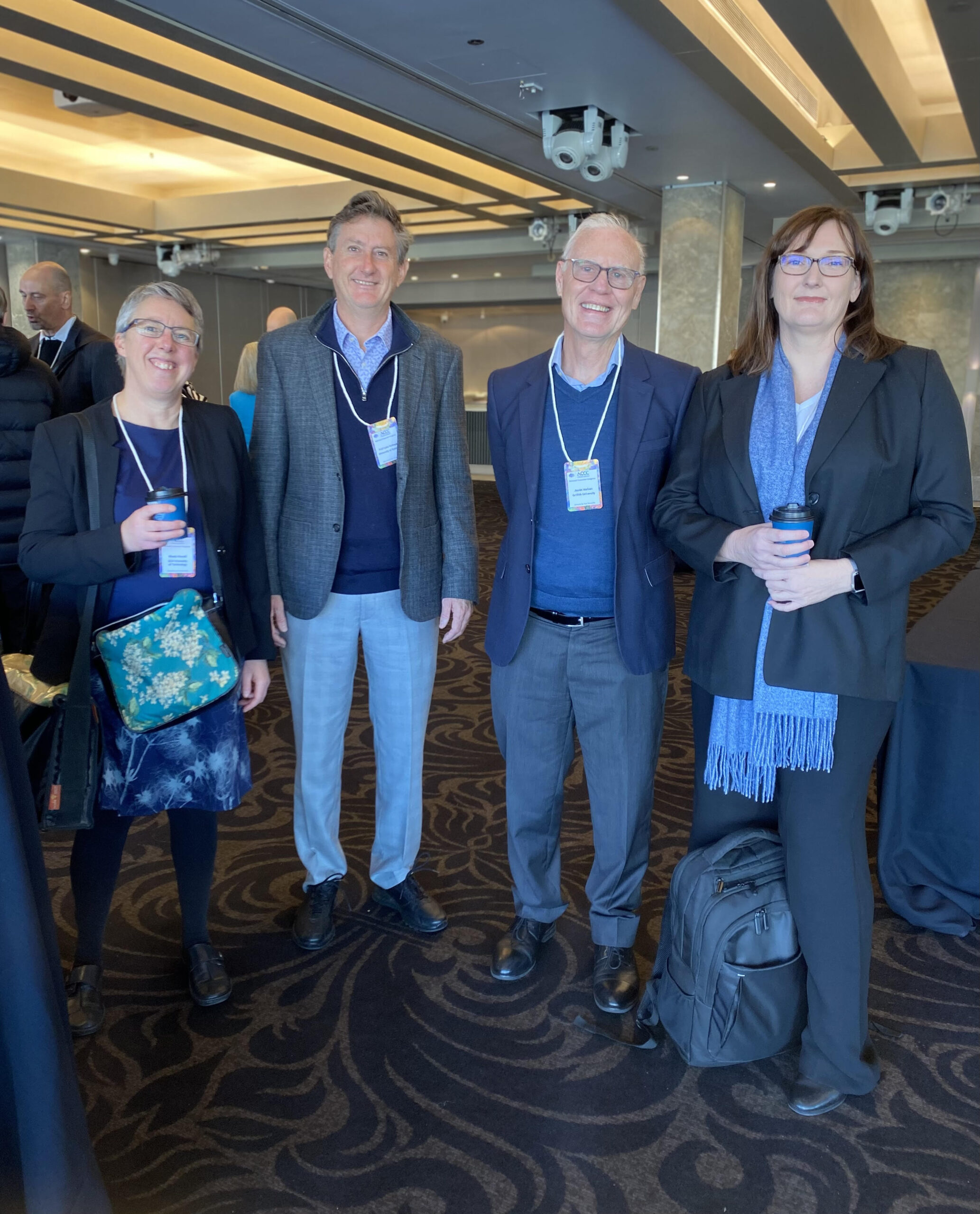
Yesterday (28 June 2024) I enjoyed attending the ACCC National Consumer Congress in sunny Sydney (program here). This annual invitation-only event provides an excellent opportunity to discuss cutting-edge law and policy issues with new and old colleagues working in Australian state and federal governments, consumer NGOs, businesses and academia (more limited, but I am pictured here with QUT’s Nicola Howell [expert in consumer credit, co-convenor of the academic-focused annual Consumer Law Roundtable] and Dr Catherine Niven [expert in product safety regulation, major contributor to my ARC Discovery Project on child product safety begun before the pandemic- with our last research output published in 2023 here] and Monash Em Prof Justin Malbon [co-author of my 2019 book on ASEAN Consumer Law Harmonisation, with UMelb Prof Jeannie Paterson who had to attend the Congress virtually this year]). It would be good to see more such events bringing together such stakeholders in Japan (compared with in my recent CCLJ article with Souichirou Kozuka), ASEAN and other Asian states.

The first session was on “Buying in Australia – Are We Safe?”. The answer was “No” from panellists including Catherine (except perhaps one speaker). The opening speaker gave a moving account of how long and traumatic the process was to secure a mandatory product safety standard around button batteries, which were fatally ingested by her infant Bella. Another early fatality involving Britney was highlighted in my 2020 piece for The Conversation (leading to an ABC radio interview). That related also to my then Journal of Consumer Policy article arguing that the Australian Consumer Law did need to add an EU-style “general safety provision” (GSP) to fill gaps so suppliers switched to a more pro-active approach to risk assessments to ensure only safe consumer products were put onto the market, rather than waiting for accidents or risks to be identified and then conduct “voluntary” recalls of unsafe goods (mainly then only to avoid potential product liability claims for compensation and/or adverse reputational effects). In my comments at the Congress, I mentioned that after Canada added such a requirement in 2010, its recall rates went down; and when Singapore added a partial GSP (requiring all products to comply with EU, specified American or ISO standards) there were immediately fewer unsafe toys on their market. Yet the Treasury-led Consultation in 2020 into adding a GSP has led nowhere.

As alternatives, it seems, we find from late 2021 a further Consultation about allowing foreign standards to be adopted into the ACL (which I commented was a no-brainer) and another Consultation into allowing civil penalties for suppliers not providing remedies to consumers from defective – including unsafe – products under mandatory consumer guarantees (which I suggested was rather broad-brush and indirect, compared to ex ante regulation).

I also mentioned that unfortunately the written Submissions made by myself and others to all three Consultations have still not been made public. This is also true of the 2023 Consultation into adding to the ACL a general unfair trading prohibition (as under EU, US or Singaporean law). That would go beyond existing ACL prohibitions on misleading or unconscionable conduct to better address eg “dark patterns” facilitated by new technologies (such as “subscription traps” that the ACCC CEO reiterated at the Congress remain a concern). There were moves to make public Submissions to that Consultation (including mine, reproduced here for convenience and giving as an example such a subscription trap laid by The Economist magazine) and they were disclosed from 28 June (the day after the ACCC Congress) noting “79 submissions were received for this consultation, including 8 confidential submissions”. But in principle I believe such consumer law reform consultations should automatically make public submissions unless confidentiality is requested. That is now common good practice across Australian law reform bodies, including the Productivity Commission. In the same vein, Australia’s consumer law reform agencies should publicise at least a short report stating whether and why they may not be proceeding with ACL amendments.

I ended my comments by alerting Congress attendees to new developments in the EU that intersected with concerns raised by the panelists. The new General Product Safety Regulation requires suppliers to document product risk assessments (and implement traceability measures), notify regulators of progress on recalls, set up a public complaints portal (as the US has had for over a decade, but was not recommended in the 2017 ACL Review report) and make mandatory for online platforms some requirements (like responding within set time frames to complaints about unsafe products) that larger firms had adopted voluntarily under the 2018 EU Product Safety Pledge (mirrored by Australia’s 2020 Pledge). The EU Product Safety Pledge has itself been updated, and existing firms have re-signed it, to allow eg regulators to have access to the platforms’ portals to better monitor them for unsafe products.

The EU’s Product Liability Directive, which was adopted in 1992 has also recently been revised to better address new technologies and trends. For example, Article 7 makes an online platform jointly liable for harm if it suggests to an average consumer that products are provided either by the online platform itself or by a recipient of the service who is acting under its authority or control. However a recent comparative law article that Jeannie Paterson co-authored (and I helped with) noted a risk that platforms will avoid this liability potential by website and other disclaimers about exercising control over the suppliers. The article contrasts Californian cases against Amazon and other legal concepts that go further in imposing shared liability on such platforms, including pros and cons of such initiatives.

The second Congress session was on “Justice delayed: strengthening consumer dispute resolution in Australia”. Panellists highlighted persistent problems of access to justice, focusing initially on (prolific) defective vehicles and National Disability Insurance Scheme services. Although Prof Kozuka and I also highlight problems in Japan, I think Australia can do better in various ways. For example, because of the evidentiary issues raised in tribunals or magistrates’ courts, regulators should first more pro-actively use their ACL powers since 2010 to bring representative actions against suppliers who claim for example that cars or other complex products comply with the consumer guarantee of acceptable quality, such as reasonable durability. They can also support consumer NGOs who could run such test cases (eg to to determine how long a mid-value washing machine should last) and then publicise the outcomes, to help facilitate future negotiations and settlements.

Secondly, the NSW Office of Fair Trading should actually use its powers (added before the COVID-19 pandemic) to order suppliers to compensate consumers for up to $3000 in harm caused by products not complying with consumer guarantees, and publicise this among suppliers and consumers. Other jurisdictions should add such powers too, especially as the ACL is supported to be uniform across Australia. It is true that some suppliers may contest such orders. But they will also likely do that if and when the ACL adds powers for all consumers regulators to order civil pecuniary penalties for major failures, as mooted in late 2021 Consultation (paralleled by the Productivity Commission’s recommendations from an inquiry into Rights to Repair). Decisions from tribunals and courts, even at lower levels, will help clarify the meaning of general terms like reasonable durability.

Thirdly, we should introduce effective public complaints registers across Australia. Most jurisdictions lack them. And for example the NSW register does not differentiate by sales volumes or other measures of scale, making it hard for consumers or their advisors to determine if one supplier is really better or worse than others. These and other questions were raised in a 2017 Report by the Productivity Commission and should be revisited to improve access to consumer redress (and indeed informed purchasing decisions).

The third Congress session was on “Regulating for real people: understanding consumer behaviour to drive effective markets”. In his thought-provoking introduction (kindly shared now here), Consumers Federation of Australia chair Gerard Brody highlighted observed limits even with “nudges”, for example regarding electricity contract switching, and asked why suppliers shouldn’t just promise or be required to automatically put customers on the best plan. The CEO of (peak NGO) Consumers NZ pointed out that past consumption patterns may not be a good guide. I also wonder about handing over so much power and data to suppliers, and making consumers too passive (which is partly why for unfair contract terms regulation the price and subject matter cannot be impugned: consumers are assumed to be able at least to investigate and consider those, provided these items are not presented in a misleading way). A better solution might be electricity bills that say “if you switched to our Plan B you would save $XXX dollars” and then the customer could opt-in. [Update of 4 December 2024: after a recent problem with my electricity company in NSW, which had stated something like this on their bills but in a confusing way, I now am more amenable to Gerard Brody’s suggestion for an automatic “upgrade”.]

The Consumers NZ CEO provided an update on the progression of a private Member’s Bill to introduce a right of repair for New Zealand, including around spare parts availability, and likely mandatory labelling about durability (as recommended also by the Productivity Commission’s Right to Repair report). Again, I would add that the EU provides some good lessons for the antipodes (and say Japan). In February 2024 the EU institutions reached provisional agreement to enact the Right to Repair Directive, as part a larger environmental initiative aiming to extend a product’s life cycle and support a circular economy. Relevant features compared to the ACL regime (which for example allows the supplier not consumer to chose between repair and replacement):

“The Directive will require producers to carry out repairs outside of the legal guarantee for products covered by repairability obligations under certain EU ecodesign regulations listed in an Annex … [likely beginning with] certain white goods (including household washing machines, dishwashers and refrigerators), vacuum cleaners, electronic displays, and mobile phones and tablets (among others)

… [requirements for] information on certain spare parts to appear on a website, making them available to all parties in the repair sector and preventing certain practices that can hinder repair – including contractual clauses or certain software- and hardware-related barriers

… [seemingly] loan devices to be provided to consumers while they wait for repair in certain cases and to enable a consumer to opt for a refurbished unit as an alternative

… Under the existing Sale of Goods Directive, the seller is liable to the consumer for any lack of conformity which exists at the time when the goods were delivered and which becomes apparent within two years of that time. In the event of non-conformity, the Sale of Goods Directive sets out a hierarchy of remedies, allowing consumers to initially choose between repair and replacement … to encourage consumers to choose repair over replacement, the legal guarantee under the Sale of Goods Directive would be extended by 12 months following a repair …”.

This EU development also intersects with greenwashing, and the hot topic of the last Congress session – “Lightbulb moments: bold ideas to help consumers play a meaningful role in the green transition”.